Playing, Part 2 · Chapter 13: Advanced Playing – Beyond Hand Positions
Arpeggios
An arpeggio is simply a broken chord. Instead of playing all of the notes in a chord together, we play them one at a time, in succession. We’ll try a new version of “Wonderful Tonight,” this time with the chords in the left hand “broken up” into arpeggios. All the notes and fingerings are the same as in the previous version, but now we play the notes of the chords one at a time, in an even eighth-note pattern.
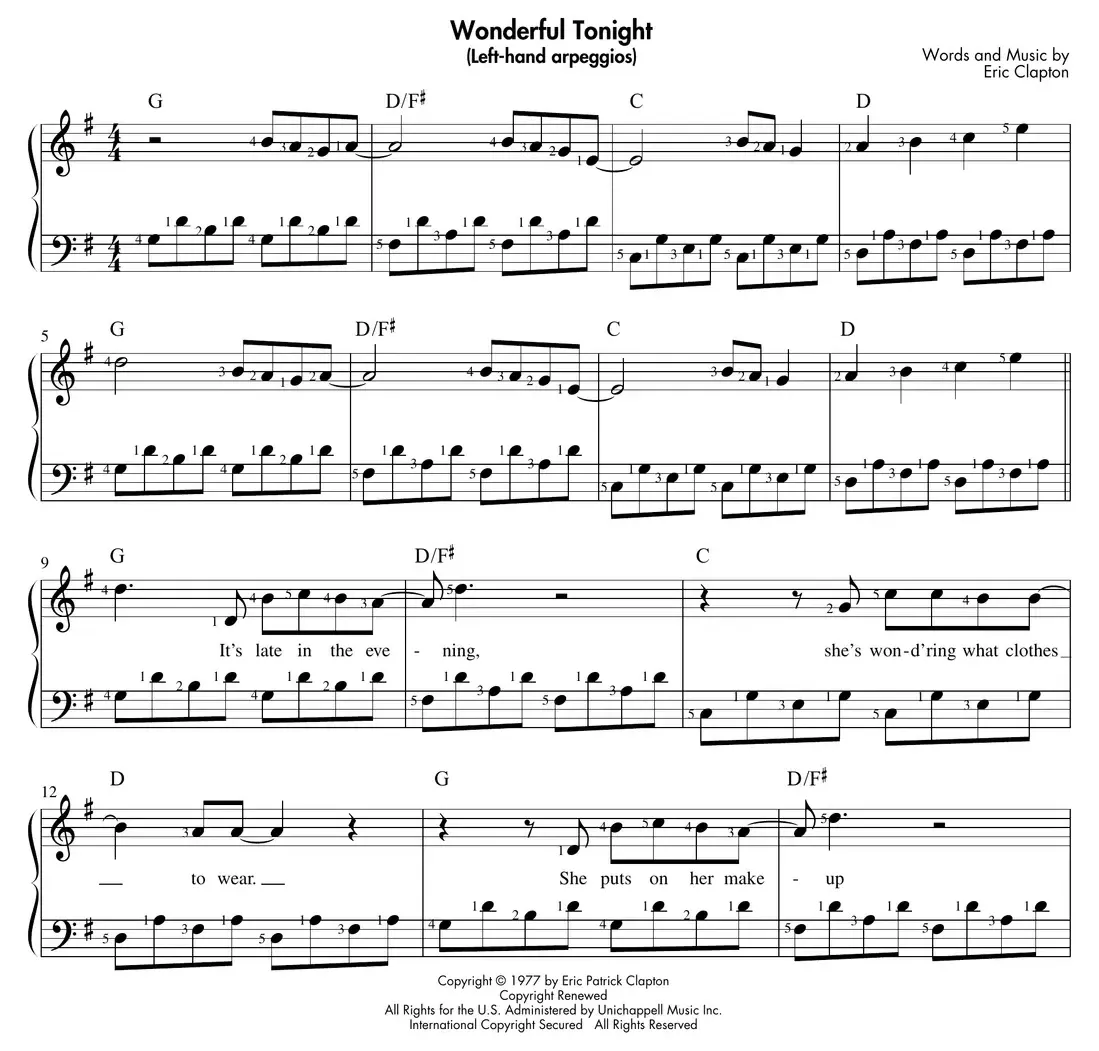
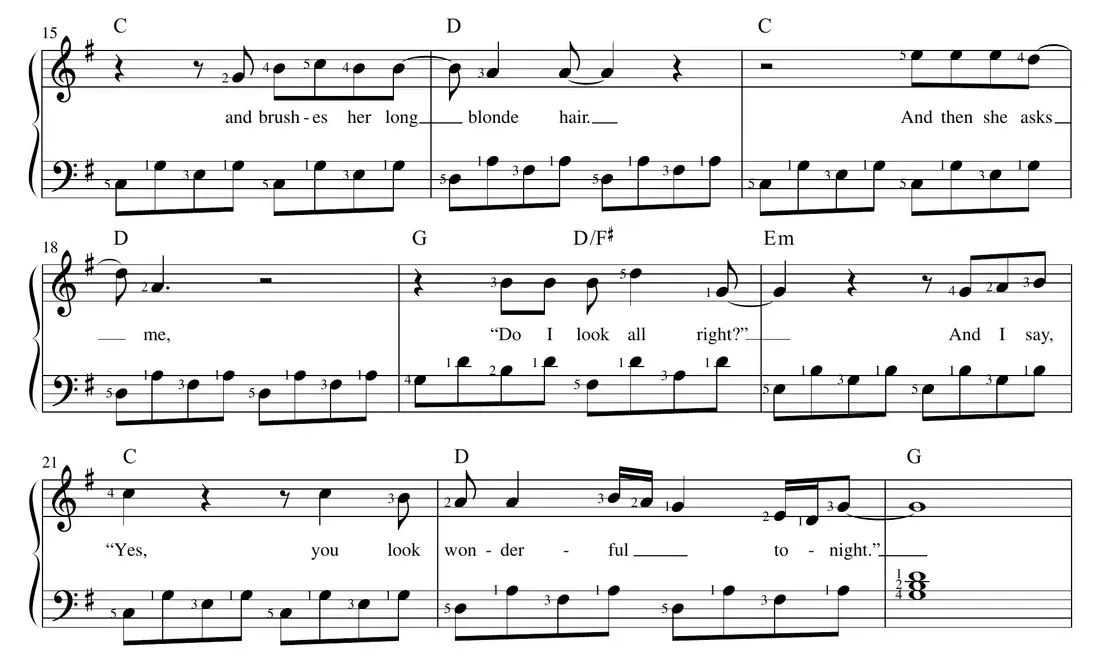
First, practice the hands individually, particularly as we’re introducing a new pattern in the left hand. Again, use a metronome while practicing to keep on track. You can start around 50 beats per minute, and gradually work up to 80–85.
This is a pop ballad that will greatly benefit from use of the damper pedal! This pedal is especially effective when playing arpeggios in an expressive style. Review the damper pedal techniques in Chapter 11 as needed, and make sure you release the pedal exactly when the chords change… no “smearing” please!
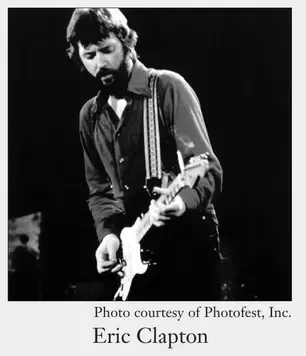
The song “Wonderful Tonight” comes from one of Eric Clapton’s most critically acclaimed albums, Slowhand, which was released in November, 1977 and sold over a million copies. The song was inspired by his then-wife Patti, as he was (impatiently!) waiting for her to get ready for an evening out. Nonetheless, it is known as one of the most emotional and touching love ballads of the modern era.
Our next song is a very fun pop-rock tune from Dire Straits called “Walk of Life.” Although the keyboard part on the record is actually played by the organ, the music can easily be adapted for the piano. This excerpt of the song is the instrumental melody used for the intro.
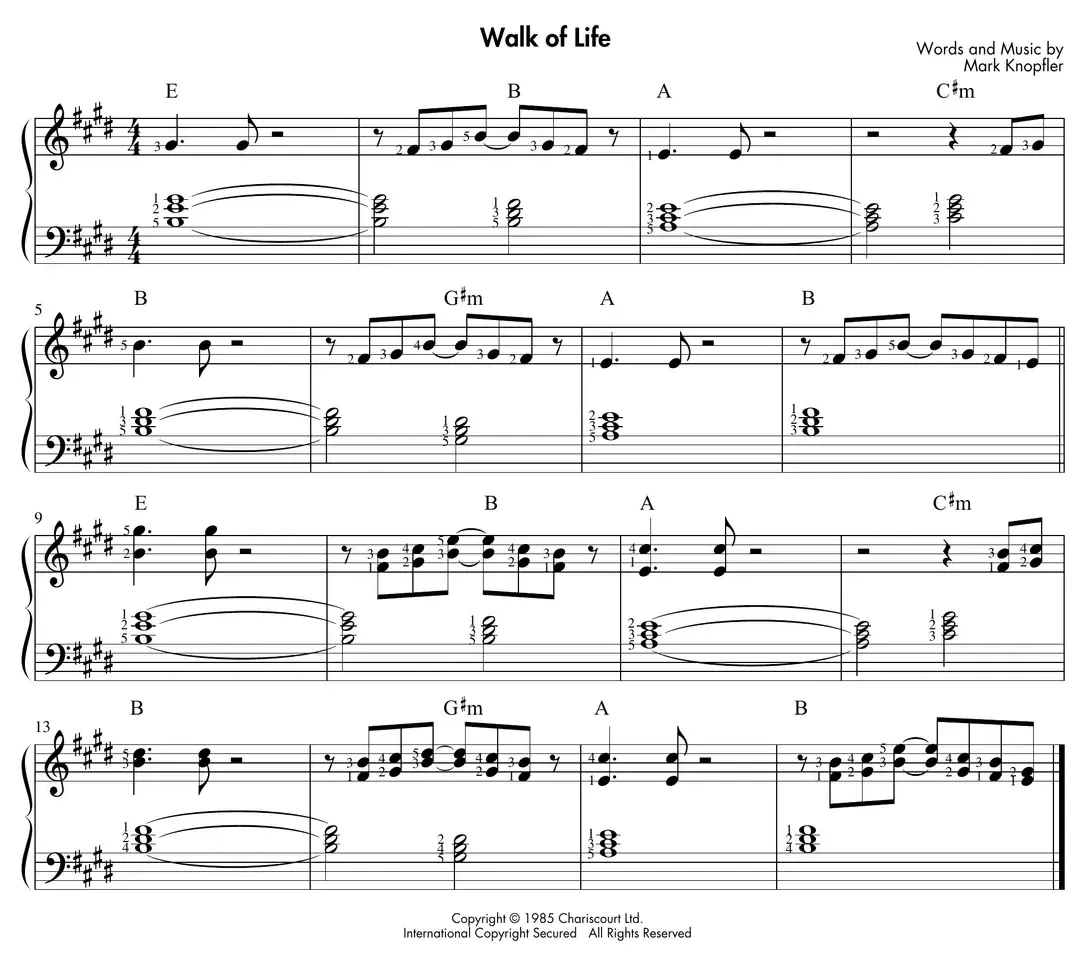
Make sure you notice the key signature. What key is this? What are the four notes that are to be played as sharp? Also pay attention to the fingerings and hand position needed for the 4th intervals in measures 10, 14, and 16. This type of figure occurs in a lot of rock and funk songs!
As you play songs in new and/or unfamiliar key signatures, it may help to go through and circle all notes affected by the key signature (i.e., all notes to be played sharp in “Walk of Life”) in a red pencil. This will not only serve as a reminder to play the proper notes, but the act of circling them can also help you get to know the key signature a little better.
The song “Walk of Life” came from the Dire Straits’ album Brothers in Arms, released in 1985. This record was a big success in the U.S., selling over nine million copies. Dire Straits was essentially a vehicle for the writing, vocal, and guitar talents of Mark Knopfler, who also became an accomplished film composer (with scores for Local Hero and Wag the Dog, among others). Pianist Guy Fletcher was an essential part of the Dire Straits sound from the mid-’80s.
OK, let’s straighten our bow ties now as we head into the classical realm (or as my jazz musician friends might say, “the legit stuff”!). In Clementi’s “Sonatina in C Major,” (I know you’ll recognize this one!), you really get to put your scale practicing to good use (review Chapter 7 if you’ve been lax in that area). Just by looking at the piece, you can probably recognize the scalar patterns throughout in the right hand. The left hand fills things in with single notes, and a few arpeggios. Practice the hands separately to get a preview, and then we’ll discuss a few more items about the piece before you get back into the practicing.